BY: Andres Vallecilla Jaramillo
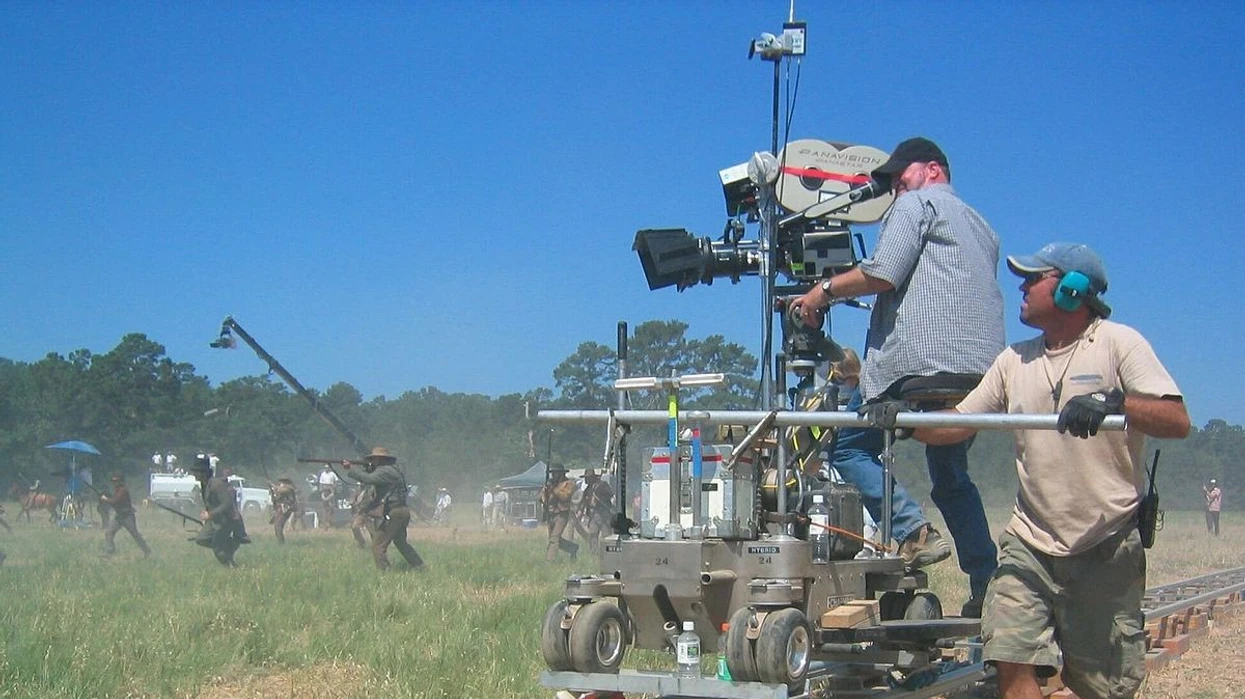
A dolly is a cinematic tool that facilitates tracking shots: forward or lateral movement. It consists of a movable platform, either on rails or rubber wheels. Sometimes crane systems are used on top of dollies to capture shots from a great height.

It is operated manually or via remotely controlled motors by a skilled operator. The camera is located on this platform and is operated by the cameraman and the first assistant. The latter, also called the focus puller, is responsible for handling the focus ring, as the camera operator must focus entirely on the camera's movement.

Studio dollies are large, stable, and sometimes have hydraulic suspensions. These are the first choice when using professional cameras, both in the studio and on location. Lightweight dollies are simpler, more economical, and allow for better handling with lighter cameras. Independent filmmakers and students often opt for these types of systems because they are easier to use.

As for the rails used to carry heavy cameras, they can be made of steel or aluminum, as these can withstand greater loads. Plastic rails are used with lighter equipment. In the early 21st century, flexible rubber tracks allowed for faster equipment setup and easier transport for use with lightweight cameras.