


Minority Report is a film directed by Steven Spielberg and starring Tom Cruise, in which an honest police officer fights against his destiny to avoid becoming the killer who murders his son's supposed kidnapper. Put that way, it seems like justified revenge, but the dilemma arises when we realize that Cruise's character works capturing those declared future murderers by three clairvoyant brothers who sleep indefinitely and predict fatal crimes in their dreams. It's as if they were reading the book of biographies of the world's inhabitants. Although the film is categorized as science fiction and belonging to the New Noir genre, it's clear from the beginning that it's a tragedy in the Greek style, featuring an oracle that foretells the future and a protagonist who strives to escape it. The film can be seen on Netflix, Amazon, and Apple TV, and when it premiered in 2002, it was a box office success, drawing around 350 million viewers. In other words, even though daily life is governed by technology and science, viewers choose to watch a film in which justice is governed by metaphysical designs rather than rationality. Why do they find it so easy to believe that life is already predetermined? Do viewers assume that somewhere in the universe there is someone who knows what will happen to our lives even before we are born? Does destiny exist?

Minority Report is a film brimming with merit. Its actors are talented and boast impressive careers. Alongside Tom Cruise, Max von Sydow plays the antagonist, and they are joined by Colin Farrell and Samantha Morton. Directed by Steven Spielberg, the film allows its various departments to conceive a futuristic work that nonetheless feels the passage of time and where technological advancements coexist with the ancient. The film's greatest strength lies in this ability to allow opposites to coexist, because just when all problems should be resolved, the characters fall into the abyss of their passions. Even if the most advanced science manages to explain these behaviors, for most they remain an unsolved mystery. This leaves a void, which is the reason why stories like Minority Report, or Oedipus Rex, the tragedy written by Sophocles, exist.
When there is no way to explain a tragedy, human beings invent a story—like that of Minority Report—to fill the void left by the absence of reasons to justify the events. Faced with unbearable causes, metaphysical reason compensates for the emptiness left by the inability to provide rational explanations or by self-imposed ignorance of the harsh truth. It is then that art finds its place in the world, where storytellers compensate for emotional shortcomings and give meaning to the existence of those who feel defeated by the real world and suffocated by it. Like everyone, in every era, we are susceptible to defeat; stories, novels, theater, film, and the narrative arts are always relevant. And this is because they are necessary for the world to keep turning. That's why MINORITY REPORT, or SENTENCIA PREVIA as it is known in Spanish, was first a short story written by Philip K. Dick in 1956, which deserved to become massive thanks to cinema and become the palliative to calm the unease generated by the baseness that people practice when they go from charming angels to despicable demons.
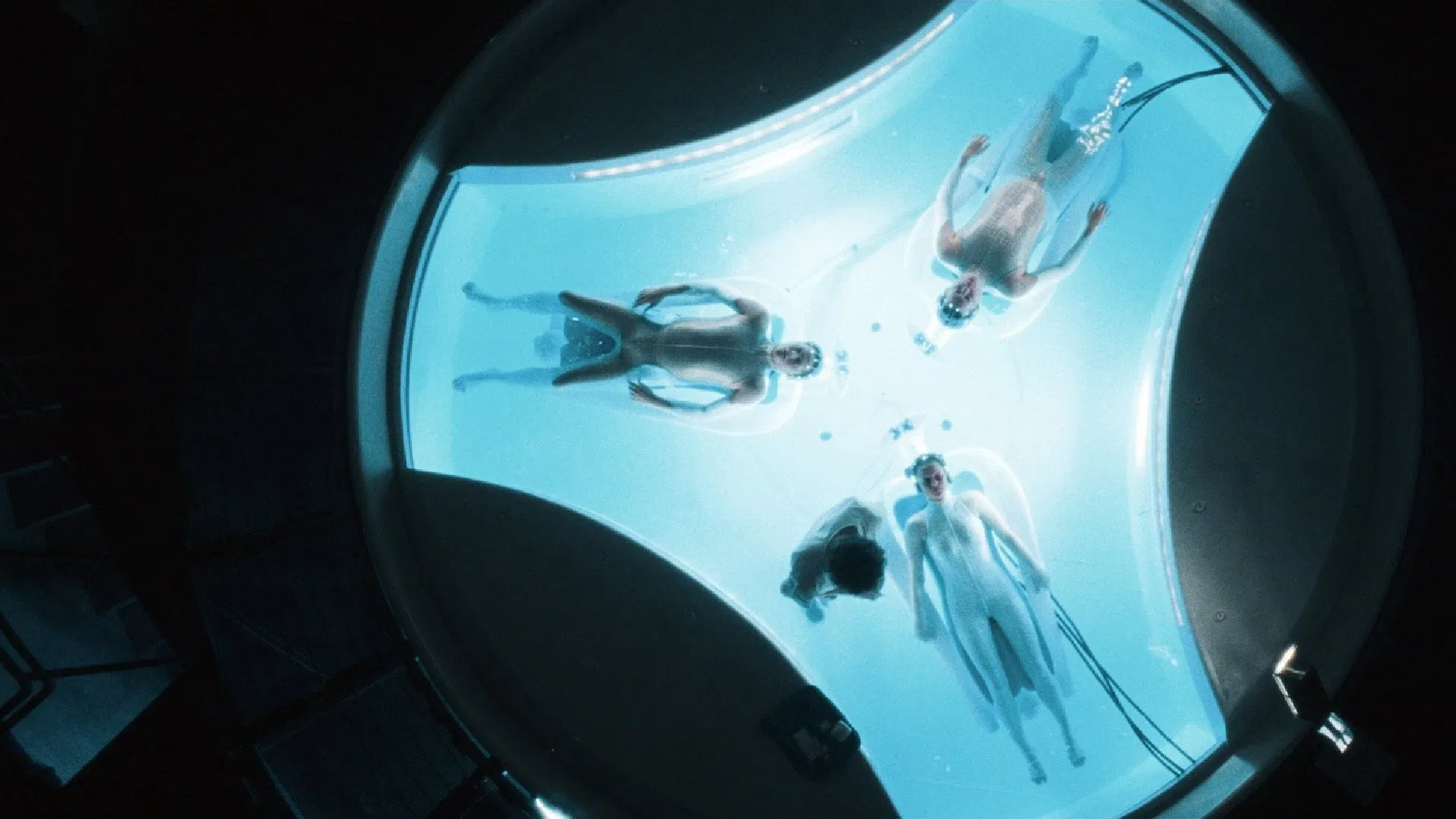
So, if we accept that scientific or rational truth isn't a priority in everyday life, then the idea that some non-human entity has written people's lives before they're born is ideal. This way, guilt and responsibility for mistakes disappear, because they can be blamed on fate. That's why it's easy to believe that fate exists, because being guilty and living by blaming others is untenable. So, does fate exist? Has any publisher released the book in which our lives are recorded? Has some archaeologist with a hat and whip found it to leave in the care of a museum or library? Fate exists for those who believe in it. And if you're one of those who assumes everything is already written, well, we'll be watching so that when something terrible happens to you, we can see how you handle it and learn how to live without responsibility or guilt, knowing that someone has already written the movie of our lives and that we follow their script, that everything is fiction and that the pain will end when the screening concludes, and that if the writer has had compassion on us, the ending will be happy or at least bittersweet.