


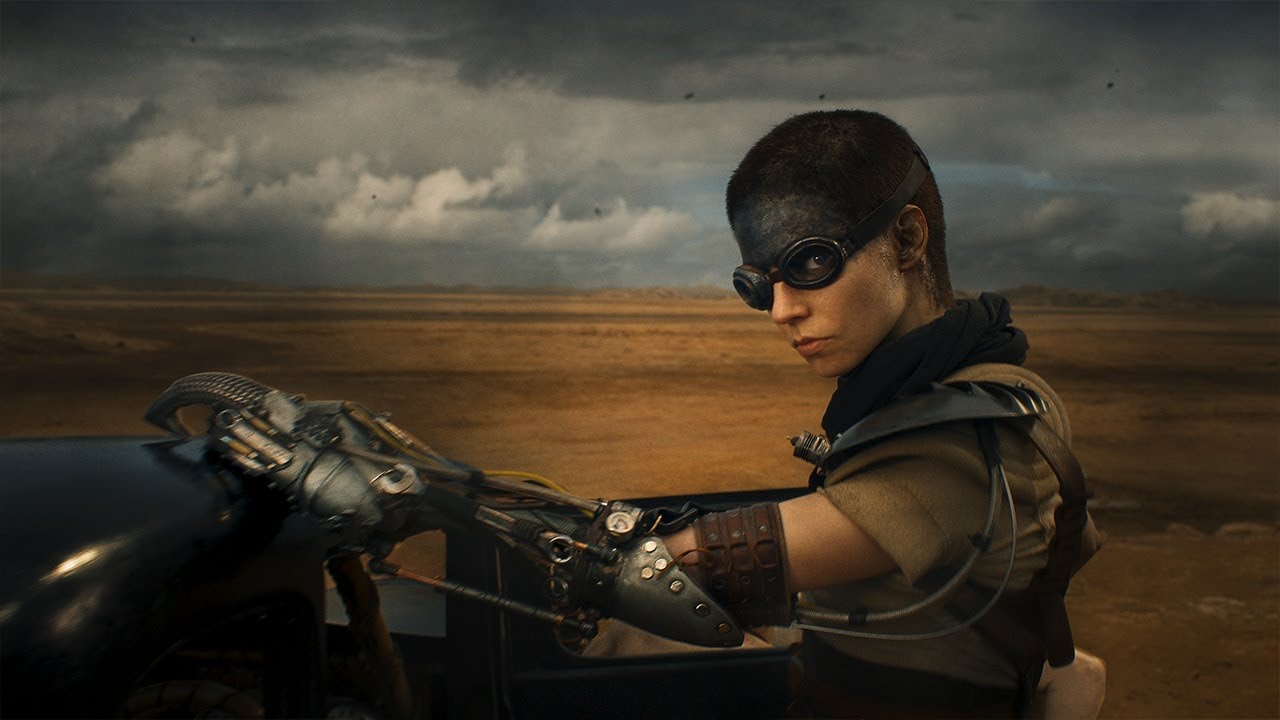
FURIOSA: FROM THE MAD MAX SAGA, premiered at the Cannes Film Festival, stirring up a storm among critics and fans of George Miller's films. This is the fourth installment based on the 1979 film that launched Mel Gibson to stardom and became one of the highest-grossing films in cinematic history, relative to its budget. MAD MAX reflected a world suffering from the 1973 oil crisis and the urgent need for fossil fuels. It was also a manifestation of the uncertainty surrounding the risk of nuclear war, generated by the strained relationship between the superpowers of that era. The explicit violence shown in that first film externalized the tension of a world contemplating its apocalyptic end and recreating it on the screen. Forty-five years after the release of MAD MAX, does it make sense to make another film in the same context? Is it justifiable to make a film like FURIOSA?
Up until the fourth film in the Mad Max saga, the narrative unfolds linearly. But in the fifth, titled Furiosa: From the Mad Max Saga, the story jumps back to the childhood of a warrior woman, kidnapped and separated from her family, who, as she grows up, fights to return to her birthplace, a verdant oasis lost in the middle of the desert. This plot is reminiscent of Odysseus in the Odyssey, who never forgot his homeland and who faced all divine and earthly obstacles to achieve his goal. In other words, Furiosa, the protagonist of the fourth and fifth installments, resonates in all cultures where girls are kidnapped during wars and where there are displaced people due to violence. That is why the two films about the warrior heroine are relevant in the 21st century. FURIOSA: FROM THE MAD MAX SAGA, justifies its existence in the barbarity of humanity, which then as now continues to devastate towns, dismember bodies, and bury spirits. Thus, FURIOSA becomes a tale of atonement for the victims of the law of the strongest, always ready to distort the codes dictated by reason.

The images in FURIOSA are brutally violent, yet the viewer endures and even enjoys them. The key lies in the eye behind the camera, the inspired vision of George Miller, the director and creator of the saga. In real life, violence assaults those exposed to it; in film and art, it is represented through the artist's subjectivity, thus becoming bearable. On screen, the violence is moving, but it doesn't seek to drive the viewer from the theater; on the contrary, it becomes an object of study and expiation. For commercial reasons, the film must keep the audience in front of the screen; in return, they can confront their inner demons and overcome them. If the film is seen in a theater, the healing effect is more intense and ultimately pleasurable. That's what FURIOSA does, that's what the MAD MAX saga does, and the audience—including you—don't need to be aware of what's being said here, because if the film is high-quality, all those processes will unfold as you experience them, without requiring a master's degree in dramaturgy to understand them. All of this justifies the existence of this type of work. You'll probably enjoy FURIOSA: FROM THE MAD MAX SAGA, especially if you see it in a movie theater, and also if you watch it on your television. In the latter case, please put down your phone and focus on the film.