


Cinema, thoughts, and imagination are the realm of freedom. They have been intertwined since the time of a cartoonist, illusionist, and theater artist named George Méliès He was determined to prove that the playful madness that lived in his head could be filmed and brought to the big screen.
At the end of the 19th century, special effects were called "tricks." This term referred to cinematic images that made the viewer believe that what they saw on screen was a recording of a real event, even though it was clearly a lie—that is, the staging of something false to make it appear real. It was similar to a magic trick in which the magician made a person disappear without any logical explanation. But that magician performing the trick on a stage wasn't as impactful as when it was filmed and then projected. In the cinema, the scene had greater power due to the size of the image and the darkness of the theater, factors that contributed to creating a sense of isolation that left the viewer at the mercy of the unknown.
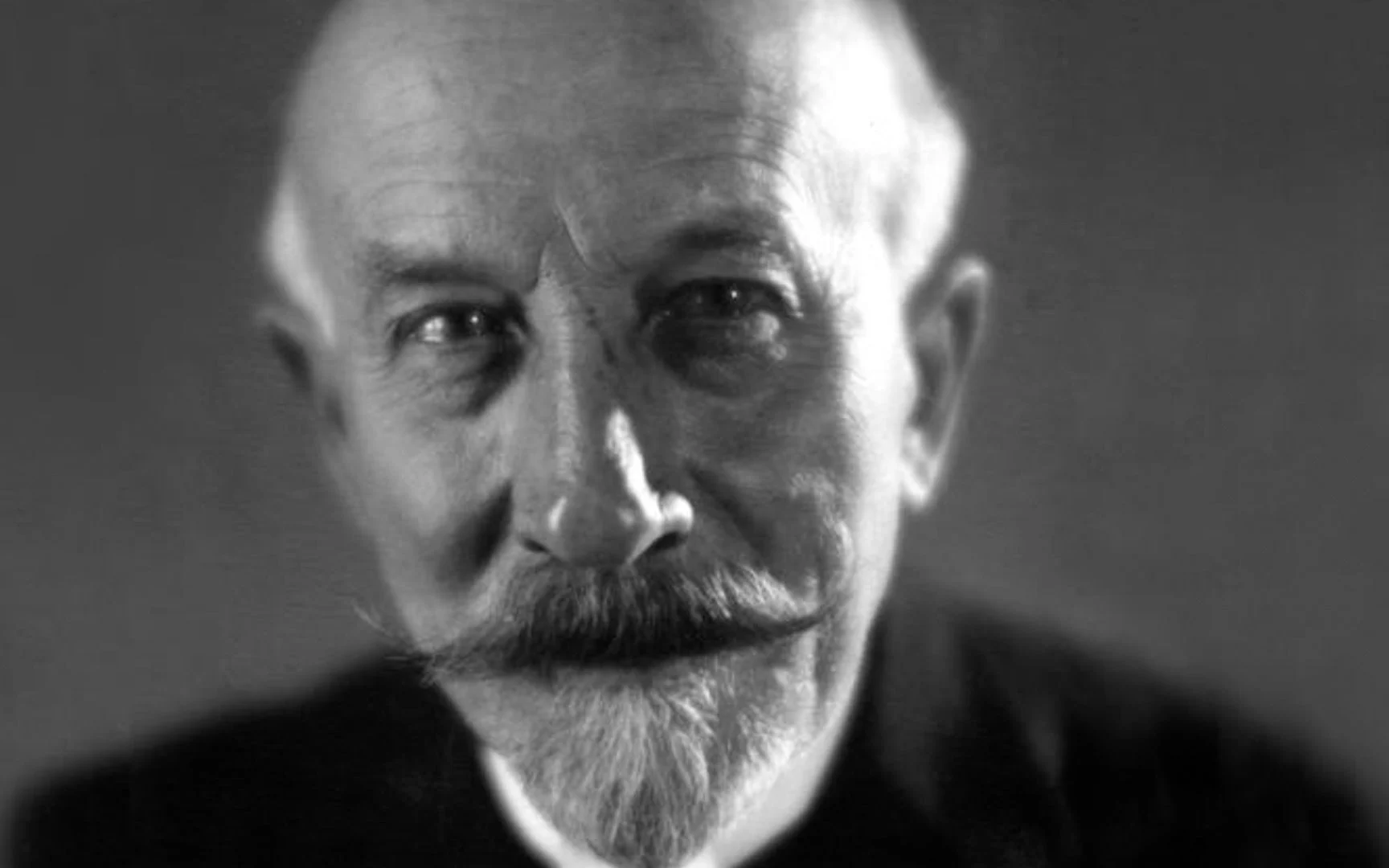
The first person to understand this powerful relationship between cinema and magic was Georges Méliès. The story goes back to a cold Parisian December in 1895, when the Lumière brothers held the first public screening of images captured with the "Cinematograph." Georges Méliès, who was sitting in the audience, was so impressed that he offered to buy the apparatus from the brothers, but they felt it wasn't worth the investment because the machine would soon become obsolete. Méliès, strongly disagreeing, bought a similar apparatus in England, and from that moment on, the course of cinema took a new direction.
For the Lumière brothers, their invention had a documentary purpose, to the point that it gave rise to the first newsreels, because it was capable of recording reality with a high level of precision. For Méliès, an illusionist and owner of the Robert Houdin theater in Paris, the cinematograph belonged to the world of entertainment and, as such, he had to have it for himself. This raises a dialectic between reality and fiction, the same one that had been present in art since photography burst onto the scene, wresting from painting its role as a naturalistic mirror of reality and thus giving rise to Impressionism and later the avant-garde movements. It was a debate similar to that held by the Neoclassical Enlightenment thinkers, opposed to the Romantics who fought to recover the regional traditions displaced by Enlightenment and scientific rationality.

The kind of cinema that Méliès liked didn't exist at the end of the 19th century; he would have to invTo create one tailored to his needs, he began by filming his own plays and magic acts. But one day, while filming a city street, the camera jammed, and he stopped using it while it was being repaired. He started filming again, but without moving the camera. When he projected the day's footage, he noticed that where he had seen men, vehicles suddenly appeared: George Méliès was witnessing the first special effect in the history of cinema. The situation was similar to when a magician made a person disappear on stage and a bouquet of roses appeared in their place… pure magic. Cinema and magic were then the same thing, only in cinema the tricks were seen on a giant screen.
From that moment on, Méliès—draftsman, designer, carpenter, electrician, actor, and director—found in cinema the ideal medium to allow his boundless imagination to bring his dreams to life. He then built a film studio 17 meters long by 7 meters wide. He used glass in the walls and ceiling to maximize the use of natural light. Between 1896 and 1913, he produced around five hundred films, of which about fifty survive today. In his works, he developed special effects such as multiple exposure, time-lapse, various types of fades, and hand-painting frames to create color films.

To gain a clearer understanding of Méliès's work, we will examine three films from different periods in his career. We will begin with THE DEVIL'S MANSION (1896), considered the foundational work of the horror genre in cinema and the first vampire film in the history of film. Although by 21st-century standards it might seem very short at 3 minutes and 20 seconds, it was considered long and risky for its time. It tells the story of two gentlemen who are tormented by the Devil. To narrate this tale, Méliès employed the "stop trick," a special effect that creates the illusion of objects disappearing before the camera lens and others taking their place. Also effective are the illusions that lead the viewer to believe they are seeing a devil with the power to teleport, transmute matter, and, as mentioned earlier, appear and disappear.
The actors based their work on mime, meaning they conveyed their emotions and performed their actions without uttering a word. For the time, this acting style seemed appropriate, especially considering it was the era of silent film. The film makes it clear that Méliès was a skilled storyteller who knew how to give his narratives a proper beginning and end.
The next work that allows us to understand George Méliès's stature as a creator is A TRIP TO THE MOON from 1902. It is considered the first science fiction film and also the first box-office success in the history of cinema. It tells the story of a group of scientists who travel from Earth to the Moon, returning by splashing down and bringing back with them a Selenite, that is, an inhabitant of the Moon. More than a work of science, it delves into an adventure story and the realm of fantasy.

It is also a critique of imperial colonialism, which travels to distant lands and appropriates the indigenous people for its own benefit. The portrayal of the scientists borders on caricature, pushing the acting towards comical rather than naturalistic performances. As a formally appealing and financially successful project, it defined a new direction for film production, offering possibilities distinct from those of documentaries in the style of the Lumière Brothers. Thanks to LE VOYAGE DANS LA LUNE, as it was originally called in French, fiction films found an unshakeable place in the nascent world of cinema.

Three, there are the specific effectsThe special effects that characterize A Trip to the Moon are: the stop-motion trick, the multiple exposure, and the close-ups of objects or characters toward the camera, simulating the viewer's movement toward them. The first is exemplified when, amidst the clashes between the scientists and the moon's natives, the latter are killed and turn into a cloud of dust: poof! The second, multiple exposures, which result in dissolves, are employed when the rocket splashes down on Earth, blending images of the sea surface with those of an aquarium. The close-up of objects, to simulate the viewer's movement, is present in the film's most iconic shot and is used to illustrate the spacecraft's arrival on the moon. It features the face of a made-up actor, surrounded by black velvet, moving on a "cart" toward the camera. The quality of the effects is guaranteed by Méliès's mastery of theatrical techniques, which he had honed even before the advent of cinema.
Besides being the gateway to a new art form, these films bear witness to how the performing arts were practiced at the end of the 19th century. Although to claim that Méliès's cinema is "filmed theater" would be reductionist, Yeah It has features that support this idea. For example, the camera is fixed and never very high, just as a spectator would see it in a theater. Therefore, there is no variety of shots, other than those created by the actors' movements in front of the camera; that is, the framing is The same, although the characters may or may not get closer to the camera.

Therefore, it is argued that Méliès did not intend to make the size of the shot, that is to say of the framing, a communicative and expressive tool typical of cinema, as would happen in the films of later directors.
With its more than 14 minutes of runtime, a scandal for those years and a cost of 10,000 francs, A TRIP TO THE MOON was the most expensive film of its time and raised the bar to the highest level to which fiction film could reach the beginning ofand the first 1990s. Consequently, it became an icon of popular culture, to the point that the image of the anthropomorphic Moon, with the rocket stuck in its eye, became familiar to viewers all over the world, even if the viewer knows nothing about the film.
Of Méliès's later works, one is considered his best film: THE CONQUEST OF THE POLE, released in 1912. Like A TRIP TO THE MOON, it was extremely expensive to produce and, at 44 minutes, one of his longest. Featuring realistic acting and elaborate sets with numerous actors, this film demonstrates Méliès's masterful use of special effects, developed by his company, Star Film. Notable examples include the tricks filmed on miniature models and the snow monster created from a puppet operated by 12 puppeteers. Despite these qualities, THE CONQUEST OF THE POLE was not well-received by audiences.

The Paris and Europe in which George Méliès began his career as a filmmaker coincided with the period known as "La Belle Époque," which translates to "The Beautiful Era." This was a time of optimism and prosperity fueled by the development of the Industrial Revolution, which led Europe to strengthen its colonial empire, with some countries harboring the illusion of emulating the great empires of antiquity.
In the arts and in the field of cinema, technological development led to the invention of photography and then to the invention of the cinematograph., the first It froze time, the second It captured time. As a result, the pictorial arts stopped seeking naturalism and instead focused on creating metaphors of the world through the expression of the subjective realities of the artists.

In this context, Méliès emerged, and his role in history was to liberate cinema from its ties to scientism and open its practice to fiction, art, and entertainment. At the end of the 19th and beginning of the 20th centuries, Méliès and his humor resonated with the tastes of society at the time. Therefore, one could say that George Méliès was something like the George Lucas of his era.
The imperial model of society entered a period of crisis, largely due to the pressure of nationalisms demanding not only political but also cultural autonomy. This moment marked the prelude to the First World War. Europe, enjoying the naive charm of the films created by Méliès, felt its life becoming more significant. While in 1902 audiences flocked to see A Trip to the Moon, in 1912, The Conquest of the Pole failed to attract attention, consequently leading to bankruptcy for the director and his company.

Until 1925, Méliès attempted to launch stage projects but not film projects. He sold his theater, and some of his films were destroyed by his creditors to extract the silver from which they were made. In 1925, he worked as a shopkeeper in a toy and candy store until he was rediscovered by the editor of Ciné Journal, the Spanish-language film journal, and also by the artistic avant-garde. He then became the subject of study for the French Cinematheque, which, from 1938 onward, restored the films it managed to recover.
In that same year, 1938, George Méliès died in what could be considered a happy ending. Both the film industry and the French state, which awarded him the Legion of Honor in 1931, recognized the importance of his work. But Méliès's legacy transcends the context of a specific historical moment. He He managed to define one of the branches necessary to understand cinema throughout its entire development. Thanks to he, Fiction cinema gained importance shortly after the first cinematograph screening in Paris in 1895.

His background as a magician led him into the world of tricks, giving free rein to his imagination to transform his dreams into images. He demonstrated to audiences and filmmakers alike that limits and barriers simply do not exist in the world of cinema. This conviction has endured, remaining relevant and inspiring new dreamers who give their all for the simple pleasure of seeing their illusions projected onto a giant screen in the darkness of a movie theater.